Skip to content
ScienceBlog.com
  • Featured Blogs
    • EU Horizon Blog
    • ESA Tracker
    • Experimental Frontiers
    • Josh Mitteldorf’s Aging Matters
    • Dr. Lu Zhang’s Gondwanaland
    • NeuroEdge
    • NIAAA
    • SciChi
    • The Poetry of Science
    • Wild Science
  • Topics
    • Brain & Behavior
    • Earth, Energy & Environment
    • Health
    • Life & Non-humans
    • Physics & Mathematics
    • Social Sciences
    • Space
    • Technology
  • Our Substack
  • Follow Us!
    • Bluesky
    • Threads
    • FaceBook
    • Google News
    • Twitter/X
  • Contribute/Contact

Research

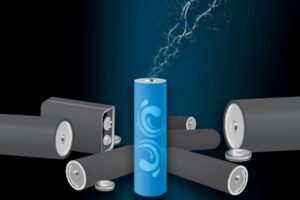
Chemical engineering professor Dr. Jodie Lutkenhaus and chemistry assistant professor Dr. Daniel Tabor have discovered significant storage capacity in water-based batteries.

Team finds major storage capacity in water-based batteries

medical monitor readout in green

The Unseen Heart

Caption:MIT researchers have found that neural networks can be designed so they minimize the probability of misclassifying a data input. Credits:Image: Jose-Luis Olivares, MIT, with figures from iStock

How to design neural networks optimally suited for certain tasks

white rate on a black background

Rats! Rodents seem to make the same logical errors humans do

omega 3 pills

New form of omega-3 could prevent visual decline with Alzheimer’s disease

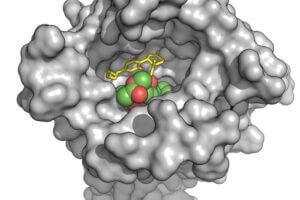
CBD (yellow stick structure) interferes with binding of an opioid (green and red) by stabilizing an opioid receptor (gray) in its inactive form.

Marijuana-derived compounds could reverse opioid overdoses

Green shrubs

Weeding the Knots

Amundsen Sea Embayment

3000+ billion tons of ice lost from Antarctic Ice Sheet over 25 years 

mother and daughter portrait

Obesity risk may pass from mothers to daughters

Neurons

Memories could be lost if two key brain regions fail to sync together, study finds

Thermometer

Mild fever helps clear infections faster, new study suggests

Family asleep

Too little sleep could make vaccination less effective

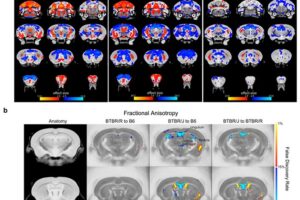
a. Brain structure comparisons of the following mice: Left: BTBR/R and B6 (normal mouse), Center: Comparison of BTBR/J and B6, Right: BTBR/J and BTBR/R. b. Diffusion tensor imaging to compare differences in nerve fibers. Red indicates the brain regions that were either bigger or had increased numbers of nerve fibers in BTBR/J mice in comparison to either B6 (left and center images) or BTBR/R (right image). Conversely, blue indicates brain regions in BTBR/J mice that were comparatively smaller or had decreased numbers of nerve fibers. These scans revealed particularly significant differences between BTBR/J and BTBR/R mice’s corpus callosum.

Ancient virus genome drives autism?

Illustration of a needle

Naturally occurring peptide may tackle the ‘root cause’ of obesity-related conditions

Older posts
Newer posts
← Previous Page1 … Page26 Page27 Page28 … Page32 Next →
Substack subscription form sign up

Comments

  • Josh Mitteldorf on Red States and Blue States Are Becoming the Same Unhappy Country
  • Josh Mitteldorf on Scientists Have Written the Rules for First Contact, and Step One Is Don’t Panic
  • John E on A New Theory Says DMT Entities Might Be Real, and Proposes How to Test It
  • ScienceBlog.com on A New Theory Says DMT Entities Might Be Real, and Proposes How to Test It
  • John E on A New Theory Says DMT Entities Might Be Real, and Proposes How to Test It
© 2026 ScienceBlog.com | Follow our RSS / XML feed