Fierce Crocodile Relative Hunted Dinosaurs in Patagonia

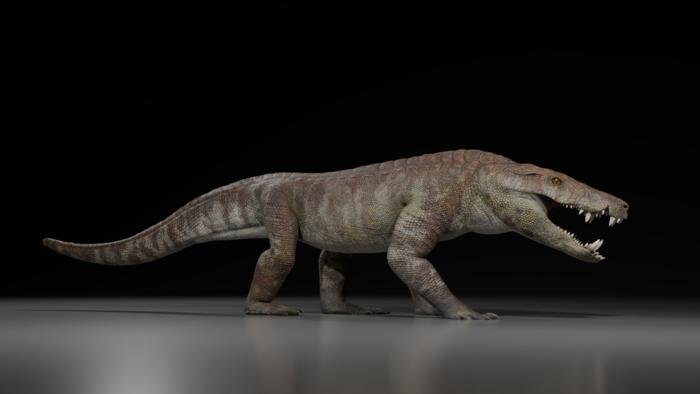
3 meters of hungry.

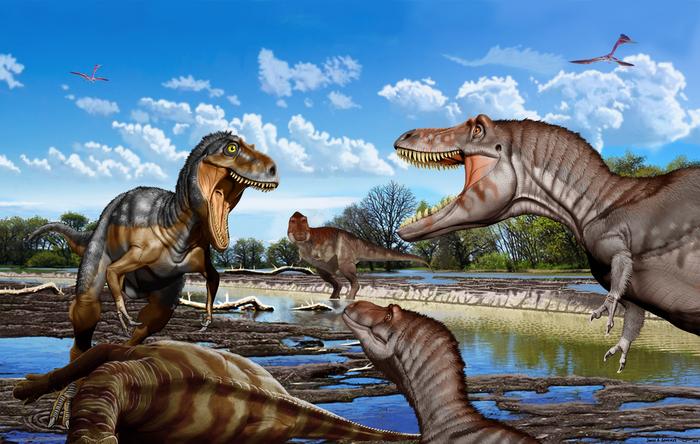
A terrifying predator lurked in prehistoric Patagonia. A newly described species, Kostensuchus atrox, stretched 11.5 feet long, weighed about 250 kilograms, and likely dined on dinosaurs. Unearthed near El Calafate, Argentina, the exquisitely preserved fossil reveals a broad-snouted, hypercarnivorous crocodyliform that roamed the Chorrillo Formation floodplains about 70 million years ago, just before the mass … Read more

Armored Worm Reveals a Hidden Chapter in Animal Evolution

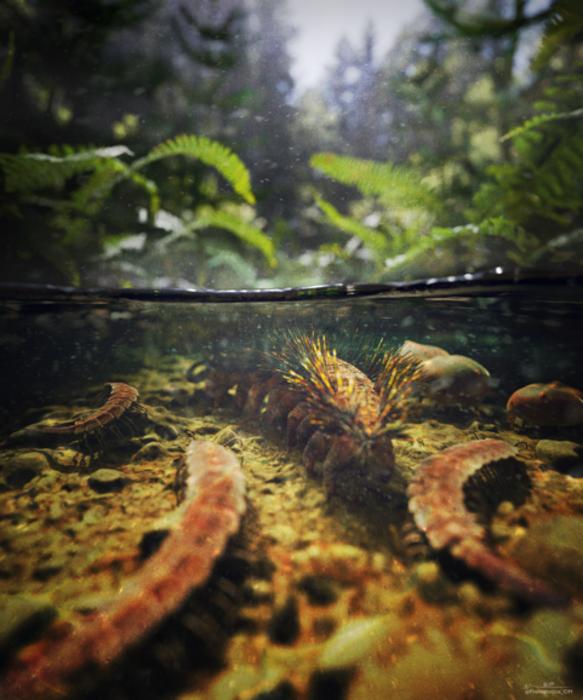
Artistic environmental reconstruction of the Montceau-les-Mines Lagerstätte (one of the two sites Palaeocampa is found) with Palaeocampa anthrax.

In a stunning reversal of more than a century of misidentification, researchers have revealed that a fossil long thought to be a caterpillar, millipede, or marine worm is actually a lobopodian—an ancient, soft-bodied relative of modern arthropods. Even more surprising, it lived in freshwater, not the ocean. This makes Palaeocampa anthrax the first known nonmarine … Read more

Why some ants become queens while others toil

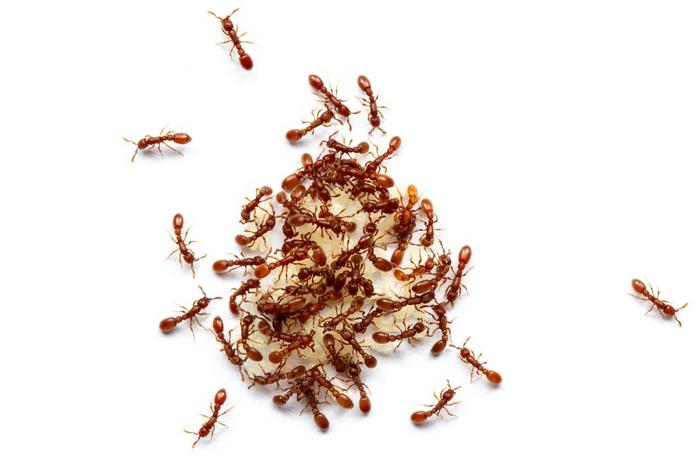
A colony of clonal raider ants raised in the Kronauer lab, seen from above.

In the complex world of ant colonies, who becomes a queen and who stays a worker isn’t just about size—it’s about what that size means, genetically. A new study from Rockefeller University, published in PNAS, reveals that while larger ants are more likely to develop queen-like traits, genes ultimately determine how body size maps to … Read more

Why Mammals Keep Evolving to Eat Ants—Over and Over Again

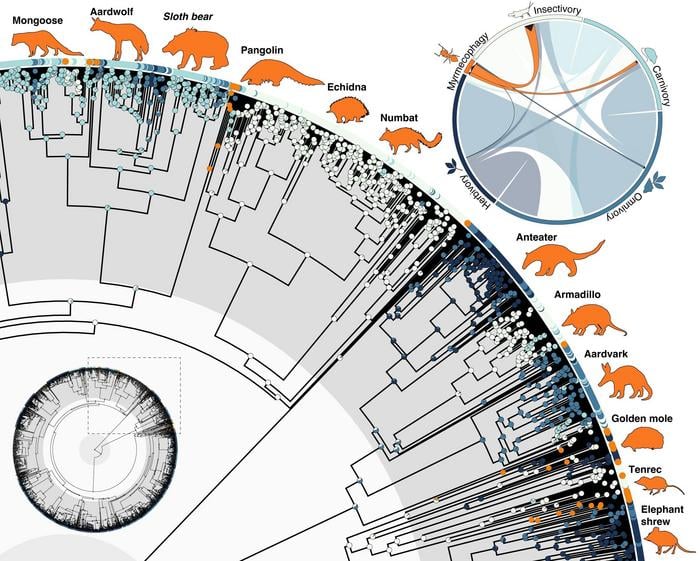
A mammal phylogeny with colors depicting the diet of living species and their ancestors; silhouettes of myrmecophagous mammals surround the tree. An inset diagram in the upper right illustrates transitions between dietary states.

The extreme appetite for ants and termites has independently emerged in mammals at least 12 separate times over the past 66 million years, according to new research that reveals one of evolution’s most unusual dietary obsessions. Scientists at New Jersey Institute of Technology traced this specialized feeding strategy across thousands of mammal species, discovering that … Read more

Giant Sloths Once Ruled Americas Before Human Arrival

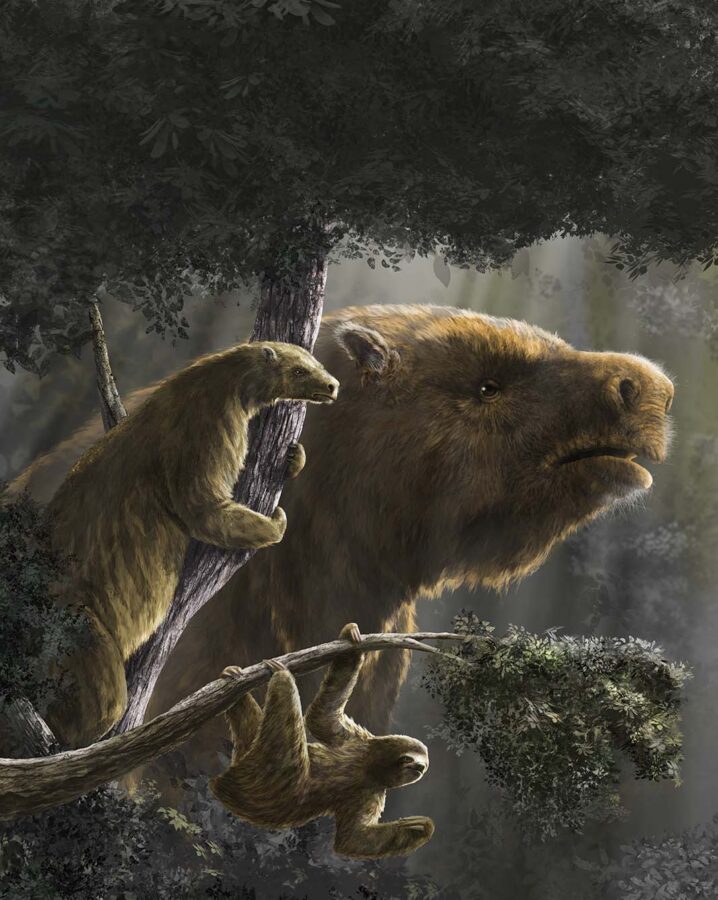
Ancient sloths inhabited a wide range of environments—trees, mountains, deserts, boreal forests, and open savannahs. These diverse habitats played a major role in shaping the wide variation in sloth species' sizes. Illustration by Diego Barletta

Elephant-sized sloths once roamed from Alaska to Argentina, carving caves with massive claws and diving into oceans for seagrass meals. These ancient giants, some weighing 8,000 pounds, dominated the Americas for over 30 million years before vanishing around 15,000 years ago—just as humans spread across the continents. A new study published in Science reveals how … Read more