Skip to content
ScienceBlog.com
  • Featured Blogs
    • EU Horizon Blog
    • ESA Tracker
    • Experimental Frontiers
    • Josh Mitteldorf’s Aging Matters
    • Dr. Lu Zhang’s Gondwanaland
    • NeuroEdge
    • NIAAA
    • SciChi
    • The Poetry of Science
    • Wild Science
  • Topics
    • Brain & Behavior
    • Earth, Energy & Environment
    • Health
    • Life & Non-humans
    • Physics & Mathematics
    • Social Sciences
    • Space
    • Technology
  • Our Substack
  • Follow Us!
    • Bluesky
    • Threads
    • FaceBook
    • Google News
    • Twitter/X
  • Contribute/Contact

Physics & Mathematics

This artist’s illustration shows a large disk of planetary debris, surrounded by a thick cloud of dust and gas, passing in front of a star.

A Star’s Dark Secret Reveals Collision in the Cosmos

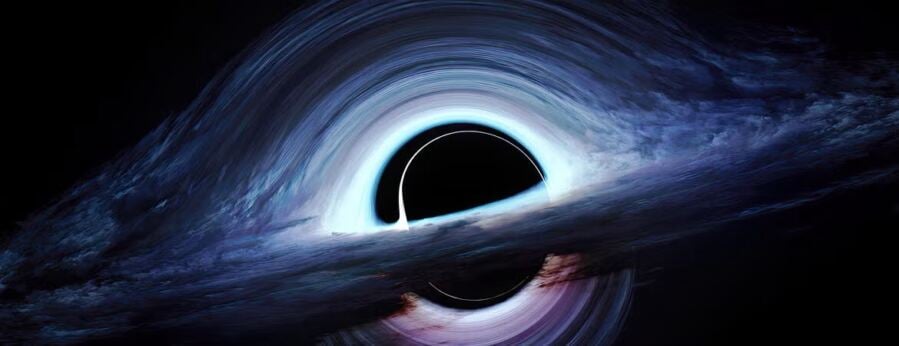
An artist's rendering of what's called an active galactic nucleus at the center of NGC 4151. The galaxy's black hole sits at the center, immediately surrounded by an accretion disk shown in blue.

How the Early Universe’s Tiniest Black Holes Became Cosmic Monsters

Using a highly coherent positronium beam, the researchers observed clear diffraction patterns after transmission through a graphene film, confirming its wave-like behavior.

When Matter Meets Antimatter in Perfect Symmetry

q bits

The Wobbly Achilles’ Heel of Unbreakable Codes

marmara infographic

Silent Threat Beneath the Sea: Electromagnetic Mapping Reveals Locked Fault Zones

shaving cream

Why Shaving Cream Resembles AI Training

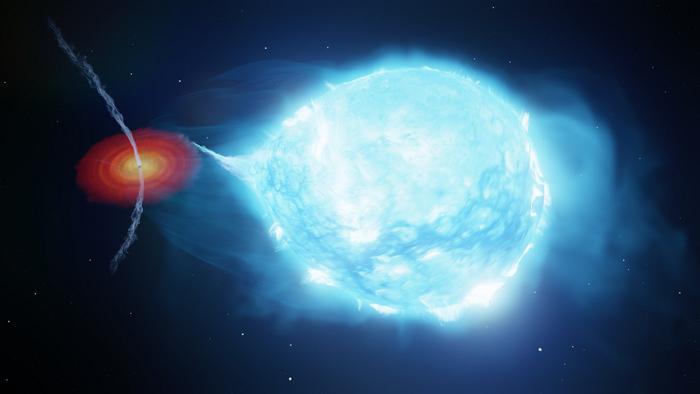
The central square image, taken with the MUSE instrument on ESO’s Very Large Telescope, shows shock waves around the dead star RXJ0528+2838.

The Dead Star That Refuses to Be Quiet

dead galaxy art.

When a Galaxy Slowly Starves to Death

An illustration depicting the vast amounts of genetic data the PanMAN technique is able to handle with very small data storage requirements. Credit: Alice Grishchenko

When Genomes Pile Up, a Smarter Filing System Helps

asteroid spinning fast

This 700-Meter Space Rock Spins So Fast It Should Be Dust by Now

Paul Eastham and Luisa Toledo Tude

Physicists Want to Run Sunlight Through a Tiny Engine

UHZ1, a record breaking galaxy 13.2 billion light-years away, seen when the universe was only 3% of its current age.

The Cosmic Dawn’s Strangest Objects Might Not Be Galaxies at All

An artistic impression of Trappist-1 b shortly before it passes behind the cool, red dwarf star, Trappist-1. Such stars are known for their activity with large starspots and eruptions. Trappist-1 b may experience intense volcanism.

Billions of Ghost Particles Stream Through You Every Second. Now We Know Where They Come From

Magenta is radio data from the ground-based Very Large Array (VLA) showing the presence of Cloud-9. The dashed circle marks an area where researchers focused their search for stars. Hubble found no stars within Cloud-9. The few objects within its boundaries are background galaxies.

A Galaxy That Never Was: Astronomers Confirm Starless Relic Floating in Space

Older posts
Newer posts
← Previous Page1 … Page6 Page7 Page8 … Page526 Next →
Substack subscription form sign up

Comments

  • Marie Feret on The Silent Frequency That Makes Old Buildings Feel Haunted
  • Dax on The Silent Frequency That Makes Old Buildings Feel Haunted
  • Karoly Mirnics on Common Prescription Drugs May Disrupt Cholesterol Pathways in the Womb and Raise Autism Risk
  • Aizen on Laziness helped lead to extinction of Homo erectus
  • Norwood johnson on Electrons in New Crystals Behave as If They Live in Four Dimensions
© 2026 ScienceBlog.com | Follow our RSS / XML feed